The William D. Clarke, Sr. Diplomatic Security Fellowship (Clarke DS Fellowship) is taking applications for its 2027 cohort, and the deadline is close: November 30, 2026, at 11:59 pm Eastern. If you want the program to check that your documents uploaded correctly, the early review deadline is November 19, 2026, also at 11:59 pm Eastern.
Clarke is the State Department’s fellowship for future Diplomatic Security Service (DSS) Special Agents. It pays toward the last two years of a bachelor’s degree or a two-year master’s, gives you two paid summer practicums, and ends with an appointment as a DSS Special Agent if you meet every requirement along the way. It is run for State by The Washington Center (TWC), not by the offices behind the Pickering and Rangel fellowships, and it has different rules from both.
We’re going to cover who can apply, what it pays, what you have to pass, how selection works, and whether it is worth it.
Clarke DS Fellowship 2027 at a glance
| Leads to | DSS Special Agent (a Foreign Service Specialist) |
| Administered by | The Washington Center for Internships and Academic Seminars (TWC), funded by the State Department |
| Who can apply | U.S. citizens aged 19 to 32 at application (preference-eligible veterans excepted) |
| Degree | Final two years of a full-time bachelor’s, or a two-year full-time master’s, graduating in spring 2029 |
| Minimum GPA | 3.2 cumulative |
| Funding | Up to $24,000 a year for tuition, plus up to $18,000 a year for other costs |
| Practicums | 10 weeks with DSS in Washington, D.C., and 10 weeks at a U.S. embassy or consulate |
| Fellows selected | 10, plus alternates |
| Service commitment | Three years as a DSS Special Agent |
| Early review | November 19, 2026, 11:59 pm ET |
| Deadline | November 30, 2026, 11:59 pm ET |
| Apply | clarkedsfellowship.org |
What a DSS Special Agent does
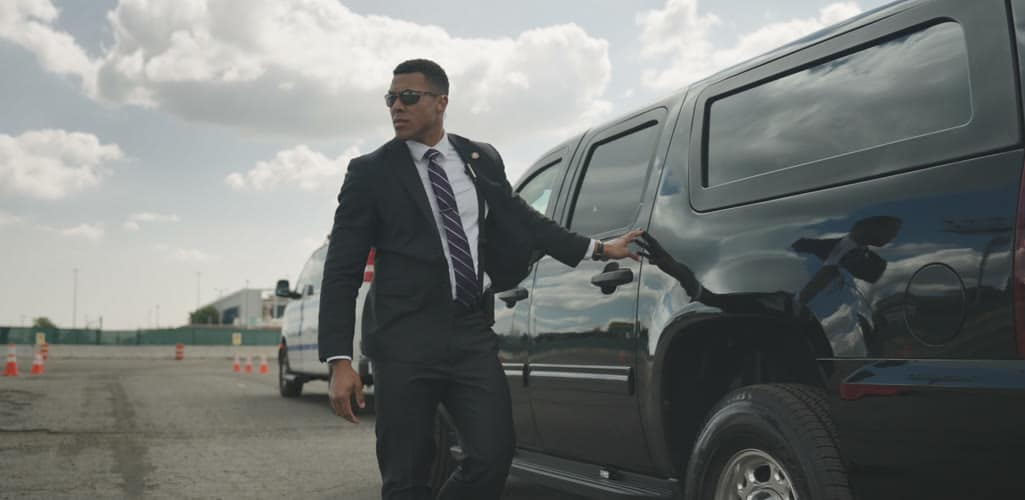
DSS is part of the Bureau of Diplomatic Security, which the program calls “the federal law enforcement and security bureau of the U.S. Department of State.” Special Agents “conduct protective security operations, criminal investigations, and manage U.S. Diplomatic mission security programs worldwide,” and overseas they serve as “the senior security and law enforcement advisor to U.S. ambassadors.” For the bigger picture, see our overview of the Diplomatic Security Service.
Special Agents are Foreign Service Specialists, not Foreign Service Officers. That matters for this fellowship: you will not take the Foreign Service Officer Test (FSOT). Your tests are the specialist assessment and the physical test before graduation, and the Diplomatic Security Special Agent Test (DSSAT) by the end of your three-year commitment as an agent, all covered below.
Who can apply
To apply for the 2027 cohort, the program says you must:
- Be a U.S. citizen. Permanent residents are not eligible.
- Be at least 19 and no older than 32 when you apply, unless you are a preference-eligible veteran.
- Be enrolled, or plan to enroll, full-time in a bachelor’s program, or plan to enroll full-time in a master’s program, at an accredited U.S. institution, in a discipline relevant to DSS skills.
- Be on track to graduate in spring 2029 after four full-time semesters as a fellow, starting in fall 2027.
- Have a cumulative GPA of at least 3.2 on a 4.0 scale. A higher major GPA does not count; the program uses all college-level coursework at every school you attended.
- Hold a valid U.S. driver’s license by the time finalists are selected, which for this cycle is December 2026.
In practice, that means three groups:
- Current sophomores who will start their junior year in fall 2027 and graduate in spring 2029. Community college students qualify if they are transferring into a full-time bachelor’s program in fall 2027.
- College seniors and graduates who will start a two-year, full-time master’s in fall 2027. You do not need to be admitted yet. List the programs you plan to apply to and their deadlines.
- People in accelerated bachelor’s and master’s programs who will graduate in spring 2029 after four semesters starting in fall 2027. The program asks you to email it to confirm eligibility.
A few details that trip people up:
- Your degree does not have to be in criminal justice. Special Agents “have a wide variety of backgrounds and degrees.” You will be asked to explain how your field supports DSS needs, and what matters most is “a strong desire to become a federal law enforcement officer in the Foreign Service.”
- The degree program cannot require summer courses. Your summers belong to the practicums.
- A second master’s is allowed if you meet everything else, but the program wants a convincing reason.
- You can work full time now, but the practicums are in person and full time for 10 weeks each, and you cannot hold another job during them.
Why the age limit is 32
DSS has hard age rules. You must be at least 21 to be appointed as a Special Agent, and you must be appointed before the month you turn 37, except for preference-eligible veterans. Because the fellowship takes two years of school before appointment, the program sets its own window of 19 to 32 for applicants.
If you are a veteran older than 32 (as of the application deadline) claiming veterans’ preference, upload documentation with your application: a DD-214 (service 2 or member 4 copy) for 5-point preference, plus your VA letter and an SF-15 for 10-point preference. Disabled veterans should send only the one-page document with the rating, never the document that lists the disability.
What the fellowship pays
The two-year fellowship provides:
- Up to $24,000 per academic year for tuition.
- Up to $18,000 per year for non-tuition costs, including room and board, books and lab fees, and travel between home and school.
- Two summer practicums with stipends, housing, and travel allowances: one in Washington, D.C., with DSS and one overseas at a U.S. embassy or consulate.
- Mentoring and professional development throughout.
That is up to $42,000 a year, the same levels the Pickering and Rangel fellowships paid before their 2027 redesign. Those two programs now pay far more (see the comparison below). Clarke did not get that increase. The program does not publish the practicum stipend amounts.
If your tuition runs above $24,000, look at the program’s partner schools before you assume you’ll pay the difference. Its “financial partners” provide scholarships and benefits to Clarke fellows “to cover tuition and other costs” in specific degree programs: George Washington University’s Elliott School, Tufts, Carnegie Mellon’s Heinz College, the University of Denver’s Korbel School, Penn State’s School of International Affairs, and UNLV. The aid varies by school. The partnership agreements range from a partial scholarship (Korbel offers up to 40 percent of annual tuition, and GWU at least $18,000 a year) to covering the full difference between tuition and Clarke’s award (Tufts, Heinz, and Penn State). One “supporting partner,” Sam Houston State, lists master’s programs whose tuition Clarke’s own tuition assistance fully covers. Other schools on the page, including Duke’s Sanford School and John Jay College, are “champions” that promote the fellowship; they are not funders. Every partner program listed is a master’s degree, so none of this helps undergraduate fellows. Most of these agreements were written in 2024, before the relaunch, so confirm the current terms with the school for the exact degree you plan to enroll in.
What you must pass
After selection, you must also clear:
- Top Secret security clearance, kept for the length of the program, plus continued eligibility for Sensitive Compartmented Information (SCI). You do not need a clearance to apply; the security, medical, and suitability processes start only after you are selected. Our guide to the Foreign Service security clearance process explains what the investigation involves.
- Medical qualification, including the supplemental physical standards specific to DSS Special Agents.
- A suitability review.
- A baseline Physical Readiness Test (PRT) between January and March 2027. Fellows and alternates must take it, but you don’t have to pass. It shows you where you stand. The program helps you schedule it at one of 33 locations across the United States and Puerto Rico and reimburses travel.
- A passing pre-employment PRT before you graduate. “If you do not pass the PRT before you graduate, you will be disqualified from the program.”
- The Foreign Service Specialist Assessment (FSSA) before you graduate. The timeline lists May 2029 as your final chance to pass it. That is the program’s name for it. State’s 2026 Special Agent hiring process uses its own written test and a structured interview assessment instead of a test called the FSSA, so the format may change before 2029.
- Full-time enrollment in the fall and spring semesters, a minimum 3.2 GPA, and the two-year graduation timeline throughout the fellowship.
- The Diplomatic Security Special Agent Test (DSSAT) by the end of your three-year commitment as an agent.
The PRT has three events, done in this order: as many push-ups as you can in two minutes, as many sit-ups as you can in two minutes, and a timed 1.5-mile run. State’s PRT guide says participants “must achieve a score of ‘satisfactory’ or better in each event of the PRT to pass,” so a strong run does not make up for too few push-ups. Here are State’s minimum passing scores at sea level for the ages Clarke fellows are likely to be when they test:
| Age | Men: push-ups / sit-ups / run | Women: push-ups / sit-ups / run |
|---|---|---|
| 20 to 24 | 42 / 50 / 13:15 | 17 / 50 / 15:15 |
| 25 to 29 | 38 / 47 / 13:45 | 15 / 47 / 15:45 |
| 30 to 34 | 35 / 44 / 14:15 | 13 / 44 / 16:15 |
Above 5,000 feet, the standards are adjusted. The program’s Physical Readiness Test page links to State’s guide, the standards, and a video, and warns that “the PRT standards may change in the future, and you will be required to pass the PRT that is current at the time that you are tested.” The baseline test in early 2027 is your chance to see how far you are from these numbers.
The 2027 cohort timeline
| When | What happens |
|---|---|
| October 13 to November 30, 2026 | Applications accepted |
| December 2026 | Finalists notified by email and interviewed remotely |
| January to March 2027 | Fellows and alternates take the baseline PRT |
| June 2027 | Orientation |
| June to August 2027 | Domestic practicum (10 weeks) and professional development series |
| September 2027 | Fellowship begins: junior year of college or year one of the master’s |
| May to August 2028 | Overseas practicum (10 weeks) |
| September 2028 | Final year of the degree begins |
| May 2029 | Last chance to pass the FSSA, pass the PRT, and graduate |
After that, successful fellows are appointed as DSS Special Agents and go through training. The program lists criminal investigative training and certification, firearm training and qualification, physical readiness standards and tests, specialized driving tactics and defensive techniques, and specialized training in protecting dignitaries, diplomatic facilities, and sensitive information.
How selection works
The application is reviewed first, then finalists are invited to a final round with two parts: an interview with three selection panel members and a 60-minute timed essay. For the 2027 cohort, both happen remotely in December 2026.
State selects 10 Clarke DS Fellows. It also names alternates. If a fellow declines the offer or fails to meet the requirements, an alternate may be offered the spot. The program does not publish how many finalists it interviews.
The program describes itself as “merit- and need-based,” and the application asks for financial documents.
What you need to apply
You apply through TWC’s application portal, choosing “William D. Clarke, Sr. Diplomatic Security Fellowship.” Your application must include:
- Proof of U.S. citizenship: a U.S. passport, birth certificate, or naturalization papers.
- Unofficial transcripts from the colleges where you completed two or more semesters. Finalists send official transcripts later. High school dual enrollment and AP credit do not need transcripts.
- A personal statement of up to 750 words on why you want a Foreign Service career, your motivations, and the background and skills that will help you succeed.
- A resume of up to two pages that highlights leadership.
- Your most recent financial aid award letter, if you received aid in the most recent academic year.
- A FAFSA Submission Summary. Everyone needs one, even if you are not in school. If you received aid in 2026-27, use the 2026-27 FAFSA; if not, or if you have been out of school, complete the 2027-28 FAFSA. The program recommends filing at least a week before the deadline, so with a November 30 deadline, do it now.
- A statement of financial need (up to 400 words) where you can address financial hardship, aid you received in college, your education debt, and how you plan to pay for school.
The three-year commitment
Fellows agree to a three-year commitment as Foreign Service DSS Special Agents and must be ready to enter the Foreign Service once they finish the program and meet State’s requirements. That is shorter than the five-year commitment attached to Pickering, Rangel, and Payne, and shorter than the five years two-year FAIT fellows owe.
You must also pass the DSSAT within those three years, and Special Agent work means being “available for assignment anywhere in the world”.
Repayment terms are not on the public pages. The relaunched Pickering and Rangel fellowships say fellows who fail or refuse required steps can be made to repay everything they received. Clarke’s does not say what happens to the funding if you are disqualified (for example, for not passing the PRT or the FSSA) or do not complete the three-year commitment. Ask [email protected], and read the fellowship agreement closely before you sign.
Clarke vs. FAIT vs. Pickering
All three reopened for 2027 and are easy to confuse.
| Clarke DS | FAIT | Pickering | |
|---|---|---|---|
| Leads to | DSS Special Agent | Diplomatic Technology Officer | Foreign Service Officer |
| Run by | TWC | TWC | State HR Outreach, Fellowships, and Internships |
| Degree | Last two years of a bachelor’s, or a two-year master’s | IT-related bachelor’s or master’s, one or two years | Two-year master’s from an approved D.C.-area list |
| Funding per year | Up to $24,000 tuition plus up to $18,000 | Up to $43,500 | Up to $55,000 tuition plus $33,000 stipend |
| Tests | PRT and FSSA before graduation; DSSAT within three years | FSSA and Diplomatic Technology Officer Test before graduation | Must pass the FSOT and FSOA Written Exercise (2027 cycle exceptions apply); FSOA during grad school |
| Age | 19 to 32 at application | 19 to 58 (two-year) or 20 to 59 (one-year) when selected | No fellowship age limit; Foreign Service age limits apply |
| Fellows | 10 | 15 | 10 |
| Commitment | Three years | Five years (two-year) or three years (one-year) | Five years |
| Deadline | November 30, 2026 | December 7, 2026 | Not confirmed; the FAQ says December 2, 2026 |
We cover each in its own post: the FAIT Fellowship and the Pickering Fellowship, plus the Rangel and Payne fellowships. If you are weighing the officer path instead, start with how to become a Foreign Service Officer.
What past fellows and agents say about it
The summer at DS headquarters
The first practicum is 10 weeks at DS headquarters. A fellow placed in the high-threat programs office said he learned how DS works with interagency partners from the FBI to inspectors general. Every two weeks, the fellows went to see “a part of the training curriculum or something new that the Bureau wanted to show us.” The summer also included a writing boot camp, which he credited with getting him ready for graduate school after three years out. His advice: “you might have 100 questions on day one, but I guarantee you by the end, you should have a thousand.” He was already drawing on his former supervisor’s network of agents to prepare for his overseas practicum.
One fellow put it this way: in some meetings, between the agents in the room, “you have like 120 years of experience.” Another said fellows are “exposed to every component of what the USG and Diplomatic Security as a whole is doing.” Another fellow, who had been skeptical that anyone stays in one career for decades, said the practicum was “probably the first time I really felt like gainfully employed.”
The summer overseas
The second practicum is at a U.S. embassy or consulate; in 2024, fellows described it as a placement in the regional security office. One fellow said that year’s overseas options included Estonia, Rwanda, Taiwan, Costa Rica, Chile, Germany, Cyprus, and South Africa. One fellow said he wanted to see how an embassy actually runs, and how the regional security officer advises the ambassador, after seeing DS from headquarters.
Your mentor
The program promises “personalized mentoring.” In 2024, fellows were paired with DSS agents as mentors. One of them, an agent since 2005, was blunt: “This is a challenging career. It’s an amazing career, but challenging.” She said fellows ask about everything from the job itself to “how do you pack out your house every two years? Or how do you travel with your pets?”
What the first years as an agent look like
In 2024, agents said new agents start at a large domestic field office. One described it as “a great training ground to learn your craft”: you work cases from start to finish with assistant U.S. attorneys, write search and arrest warrants, support protective details, and travel on temporary duty to embassies. Another said, “As soon as you start, you’re immediately given responsibility.” Not long into his first tour, he was the lead advance agent for the Dalai Lama’s visit to Boston, and he got an indictment in a passport fraud case tied to drug trafficking.
From there, agents can bid on protection assignments, such as two years traveling with the Secretary of State, or on the major events office, which protects U.S. teams at the Olympics and the World Cup. Overseas, a new assistant regional security officer “may be called on to manage one or two” of the embassy’s security programs, such as the local guard force or training the Marine Security Guard detachment. One senior agent said a post works “like a small town where the ambassador is the mayor. The RSO is the sheriff.”
An agent then serving in Bangkok described one day in 2023: helping run a 150-person event at the ambassador’s residence, then an evacuation drill for more than 500 people, while also managing anti-terrorism training for Thai police explosives experts. “No week is the same,” she said, “which is what makes this job so exciting.”
Life overseas
Agents move every two to three years and arrive at posts with housing and support already in place. The Bangkok agent studied Thai for eight months before her tour, is half of a tandem couple (her wife is also an agent), and has moved their dog across three continents. One Diplomatic Security speaker estimated that about 85% of assignments allow your family to come with you, with a small number of one-year assignments where they can’t. One agent who served a year in Mogadishu took three rest-and-recuperation trips during it, then chose Washington assignments while his children were in school. A retired agent did the math: at two or three years a post, a 20-year career is only about 10 places, so don’t expect Paris or Japan. As a fellow put it, “you need to be somebody that is a world traveler. When we go overseas, we are guests in these international foreign countries.”
You don’t need a law enforcement or military background. State can give you the hard skills like shooting or physical fitness. DS values the soft skills: communicating and handling difficult conversations diplomatically.
What fellows who got in advise
- Start early. One fellow thought the application would take “a week or two,” and it took almost a month. He revised his personal statement “probably six or seven times,” with professors, friends, and mentors reading it.
- Show why you want the work, not the travel. “Everyone likes to travel overseas,” one fellow said, but “sunshine every day makes a desert.” He wrote that he values “the depth of experience more than I value quality of life.” Another argued that intercultural communication matters more than how many times you have been abroad, since international travel “isn’t accessible for everyone.”
- Rehearse the final round. The finalist stage is a video interview and a one-hour timed essay. One fellow asked a professor to run practice interviews, which the professor “made … extra hard.” He also suggests practicing a one-hour essay: outline, five paragraphs, five or 10 minutes to revise. He expected prompts might touch on international affairs or law enforcement. A recruiter stressed that “it’s not a knowledge test”; it is about “your ability to take a position on an issue.”
- Treat the baseline physical test as a starting point. You don’t have to pass it. One fellow called it “just a metric for you to see where you’re starting,” and recommended a general strength and conditioning program, then push-ups, sit-ups, and running as the test gets closer.
- Don’t count on extra school aid, but ask. One fellow said graduate schools sometimes add aid for fellows (“don’t count on that,” he said), and another chose his program mainly because it left him with the least debt. If you are headed to a master’s, check the partner schools above.
Fellows in the program were also frank that DS “is going to ask the most of you. It’s going to demand the most, but it’s also going to provide the most,” and that as DS takes on more missions, “the resources might not be there to accommodate it.” Their advice for the application: “Know why you want to do it,” and if you are not picked, “Don’t give up. If you don’t get picked, try again.” One fellow found Clarke through the Rangel Summer Enrichment Program, and another applied after being an alternate for the Rangel Fellowship.
Is the Clarke DS Fellowship worth it?
The fellowship offers up to $42,000 a year toward a degree, two paid practicums inside DSS, mentoring, and an appointment as a Special Agent at the end, a job that otherwise means competing in an open hiring process. The three-year service commitment is shorter than the five years Pickering and Rangel require.
The program says fellows who complete it and meet State’s entry requirements “receive an appointment as a Diplomatic Security Service (DSS) Special Agent.” It does not say how soon. Pickering and Rangel fellows waited months to enter the Foreign Service in 2025 and 2026 (GovExec reported on the delays in March 2026), and the Clarke pages say nothing about how earlier Clarke cohorts fared.
Before November 30, weigh each of these:
- The age window is fixed. You must be 19 to 32 when you apply. The program’s veterans FAQ measures age as of the application deadline, so if you turn 33 or are still 18 around November 30, email the program first. Above 32, only preference-eligible veterans qualify.
- The physical test is pass/fail. The baseline PRT is forgiving, but failing the pre-employment PRT before graduation disqualifies you. If you are not already training, the fellowship gives you about two years to get there.
- Clearance, the FSSA, and repayment. Selection waives none of the requirements in “What you must pass”; you learn your clearance and suitability outcome only after you are selected, and repayment terms are unpublished (see “The three-year commitment”).
- The award was not raised. The Pickering and Rangel awards roughly doubled for 2027. Clarke’s did not. If your degree costs more than $24,000 a year in tuition, you cover the gap, unless you enroll in one of the program’s partner master’s programs, whose aid ranges from a partial scholarship to the full gap.
- Ten spots. It is a small, competitive cohort. Apply anyway if you fit. File the FAFSA by about November 23, start the 750-word personal statement now, and pull together the rest of the documents in the time left.
If you are in the age window and set on becoming a Special Agent, the fellowship pays toward your degree along the way. If you are unsure about law enforcement work, remember that you need “a strong desire to become a federal law enforcement officer in the Foreign Service.”
Frequently asked questions
When is the Clarke DS Fellowship deadline?
November 30, 2026, at 11:59 pm Eastern for the 2027 cohort. The optional early review deadline, which lets the program check your documents so you can fix problems, is November 19, 2026, at 11:59 pm Eastern.
What is a Clarke DS Fellow?
A student whose last two years of college, or two-year master’s, are partly funded (up to $42,000 a year) by the State Department’s William D. Clarke, Sr. Diplomatic Security Fellowship. In return, fellows complete two DSS practicums, pass the PRT and the FSSA before graduating, and serve at least three years as DSS Special Agents. For the regular route to becoming a Special Agent, see our overview of the Diplomatic Security Service.
What is the age limit for the Clarke DS Fellowship?
You must be at least 19 and no older than 32 when you apply, unless you are a preference-eligible veteran. The limit exists because DSS Special Agents must be appointed before the month they turn 37.
Do I need a law enforcement or criminal justice degree?
No. Any discipline relevant to DSS skills can qualify, and you explain the connection in your application.
Do I have to pass the Physical Readiness Test to be selected?
No. Selected fellows and alternates take a baseline PRT in early 2027 that they do not have to pass. You must pass the PRT before you graduate, or you are disqualified from the program.
Do I need a security clearance to apply?
No. The security, medical, and suitability processes begin only after you are selected. Fellows must then obtain and maintain a Top Secret clearance and remain eligible for SCI.
Do Clarke DS Fellows take the FSOT?
No. Special Agents are Foreign Service Specialists. Fellows must pass the Foreign Service Specialist Assessment (FSSA) and the PRT before graduation, and the Diplomatic Security Special Agent Test (DSSAT) within their three-year commitment.
How many Clarke DS Fellows are selected?
State selects 10 fellows for the 2027 cohort, plus alternates who may be offered a spot if a fellow declines or does not meet the requirements.
How much does the Clarke DS Fellowship pay?
Up to $24,000 a year for tuition and up to $18,000 a year for other costs such as room and board, books, and travel, for two years, plus stipends, housing, and travel allowances for two summer practicums.
How much do DSS Special Agents make?
The current Special Agent job announcement, SA-2026-0001, pays $61,382 to $98,460 at grade FP-06. It closes December 31, 2026, and Clarke fellows will not be hired until after they graduate in 2029, so your starting pay will depend on the announcement and pay tables in effect then.
Do Clarke DS Fellows have to repay the money if they are disqualified?
The program does not say. Pickering and Rangel publish repayment rules; Clarke does not. Ask [email protected] and read the fellowship agreement before you accept.